Solitude VR
Developed as a Bachelor's Thesis project for the Game Development and Learning Technology program at the University of Southern Denmark (SDU), evaluating the advantages and disadvantages of VR conversion.
Tech Stack
The VR Adaptation Dilemma
This project investigates the design friction encountered when porting 'Solitude' from a traditional PC setup to a first-person Virtual Reality experience. While VR drastically heightens spatial presence and emotional engagement with the game's psychological themes, translating mechanical systems originally built for flat screens, such as rapid dodge-rolls, stamina-based combat, and third-person platforming, presents severe user experience and comfort challenges.
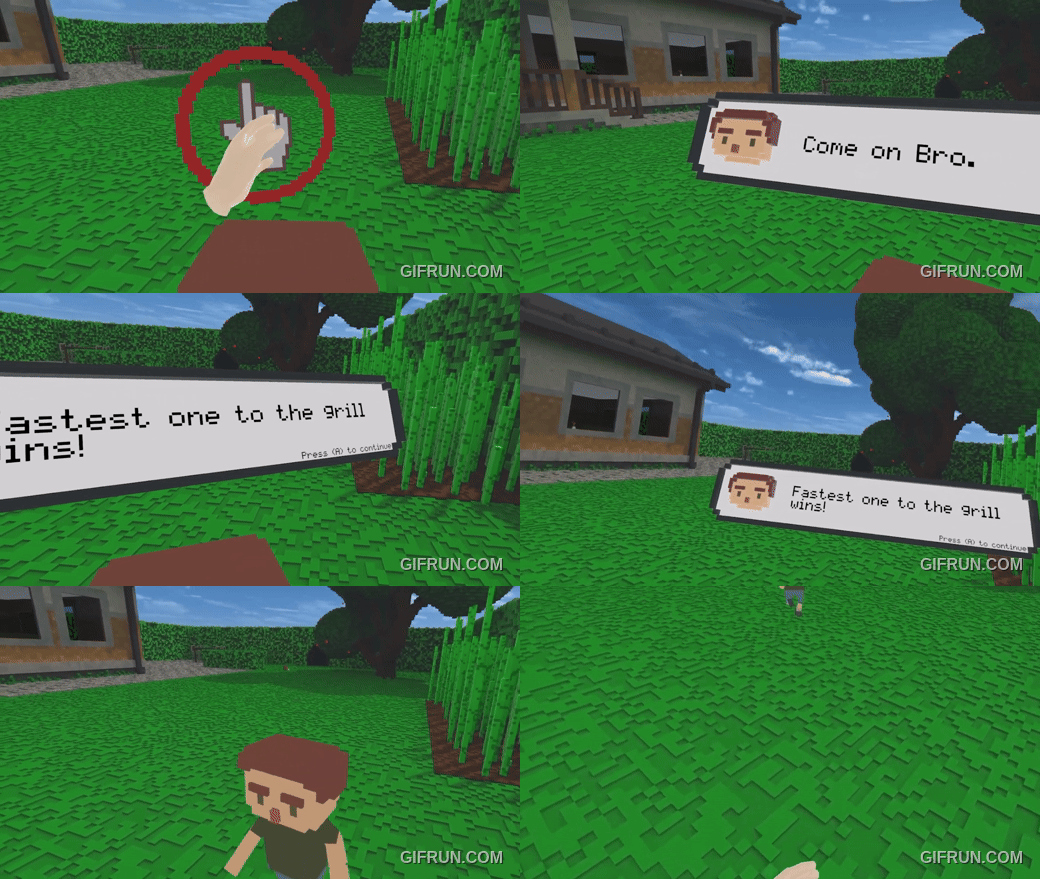
Locomotion & Motion Sickness Mitigation
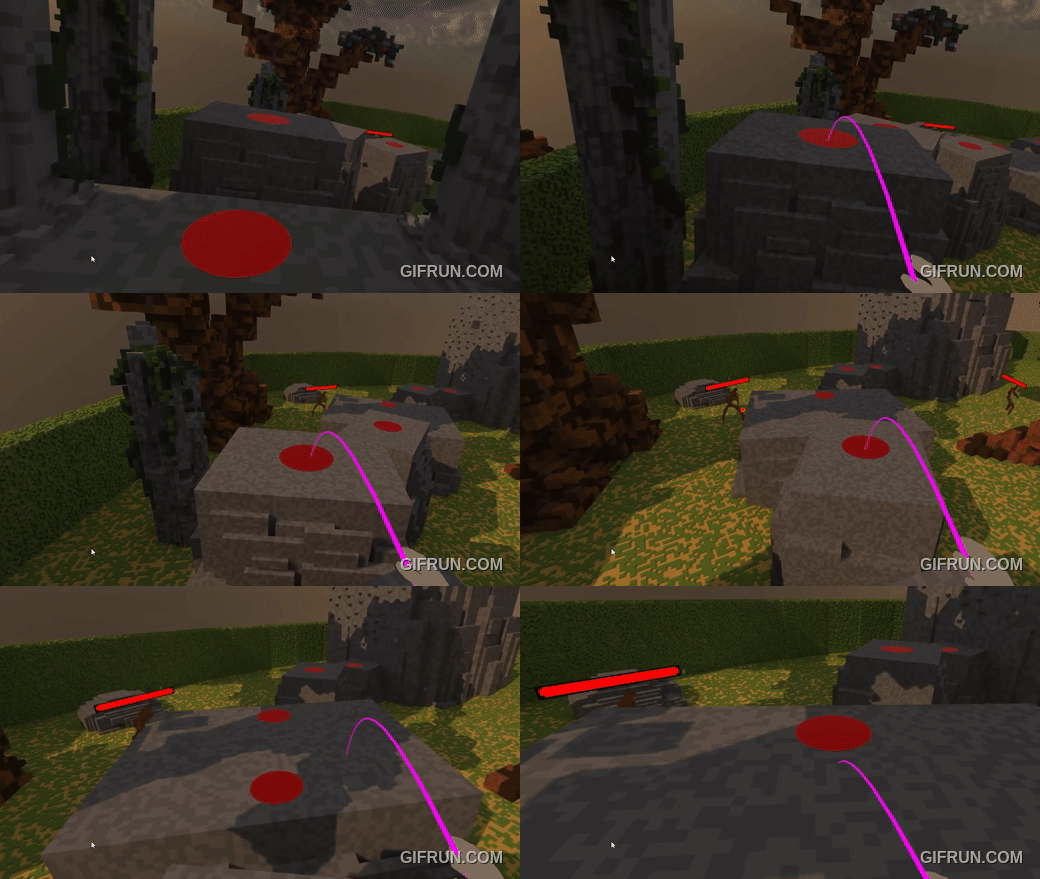
To counter Simulator Sickness (SS) induced by vection, the project implemented and tested two distinct locomotion profiles: Continuous Joystick Movement and Teleportation. Empirical testing revealed that while continuous movement preserved the game's tense, Dark Souls-inspired pacing, it significantly increased nausea. Teleportation offered a comfortable alternative but fundamentally altered the intended combat difficulty and spatial progression.
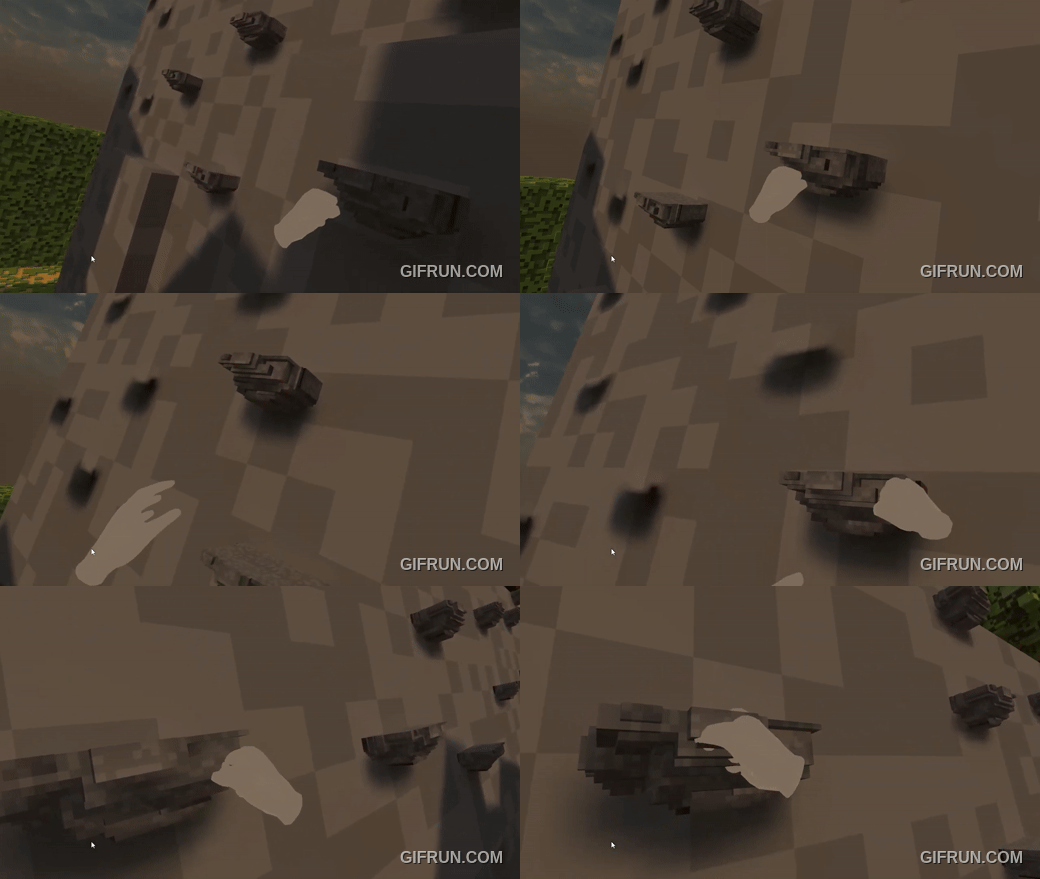
Redesigning for First-Person Presence
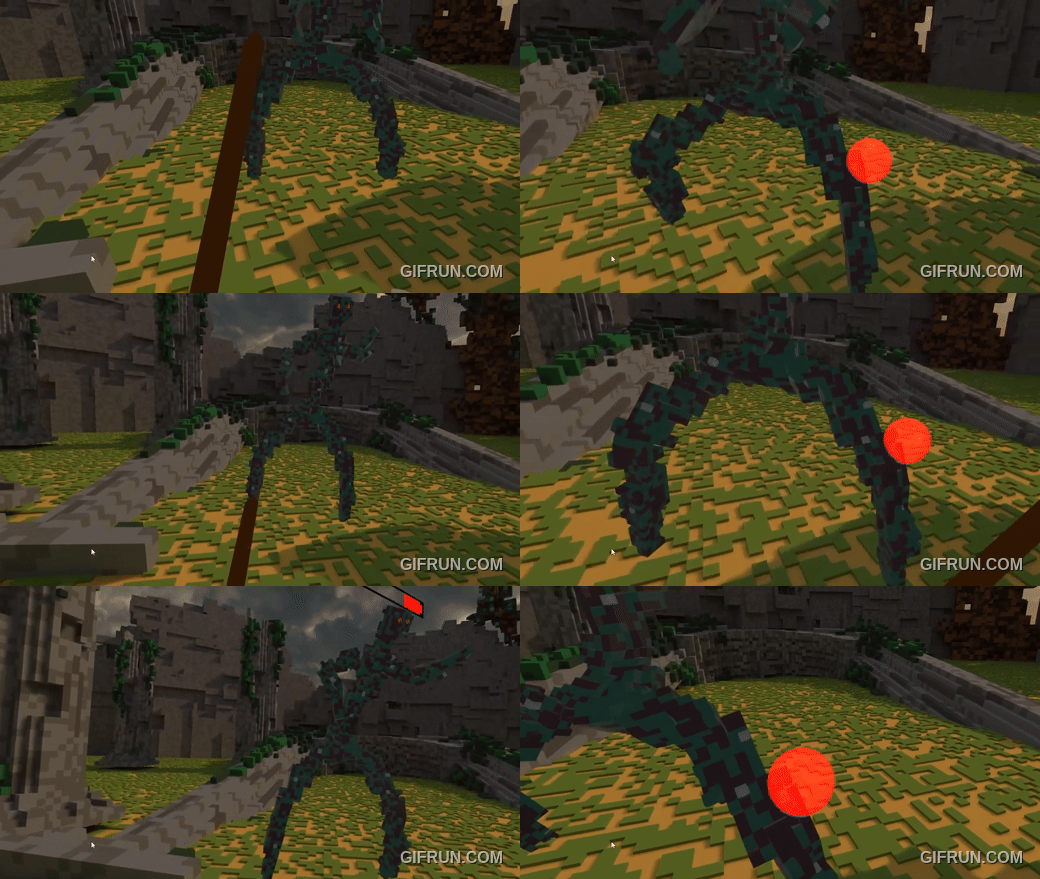
Transitioning from a third-person camera to a first-person VR perspective required a complete overhaul of the game's spatial scale and interaction architecture. Environmental voxel structures were upscaled to feel imposing, and the UI was migrated from a screen-space HUD to an immersive, diegetic world-space system. Combat mechanics evolved away from abstract button-mashing toward physical, hand-tracked swinging gestures using the Oculus Touch controllers.
Empirical Findings & Framework
Through structured user testing measuring immersion (via the Igroup Presence Questionnaire) and physical discomfort, the thesis maps out a definitive trade-off framework. VR conversion significantly amplifies the player's psychological isolation and spatial empathy with Arthur's fear. However, it demands a strict compromise: developers must choose between high-comfort mechanics that dilute high-intensity gameplay, or high-intensity mechanics that restrict the game to a niche audience with high VR tolerance.
User Testing & Methodology
The project's conclusions were drawn from rigorous quantitative and qualitative data gathered during controlled testing sessions. By isolating variables between the PC version and the VR configurations, the study highlights how field-of-view restrictions, hardware performance optimization, and physical interaction fidelity directly dictate the success of a platform port.