We Are in Space
Developed as a semester project for the Learning Technology 2 course within the Game Development and Learning Technology program at SDU.
Tech Stack
About the Project
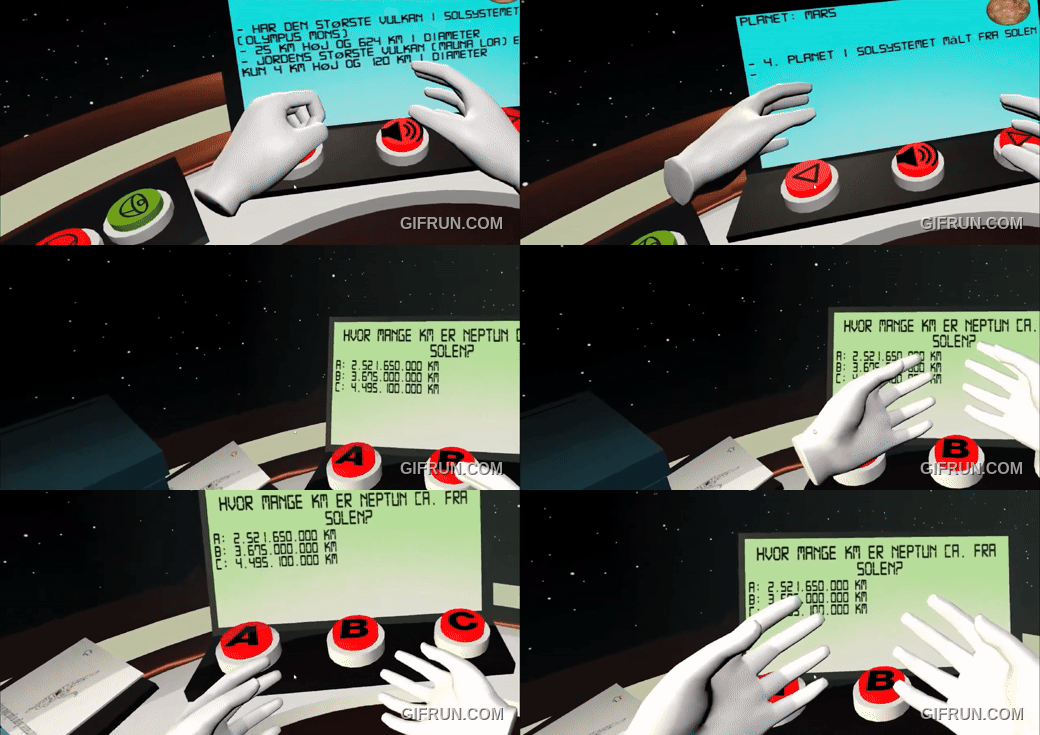
'We Are in Space' is an immersive VR application targeting physics and chemistry curricula for Danish elementary school students (grades 7-9). Built to supplement traditional academic reading with dynamic learning, the tool transports students directly into space to interact with astronomy concepts. Users explore the solar system, observe planetary scales, and examine celestial movements firsthand to build a concrete spatial understanding of our universe.
Learning Mechanics
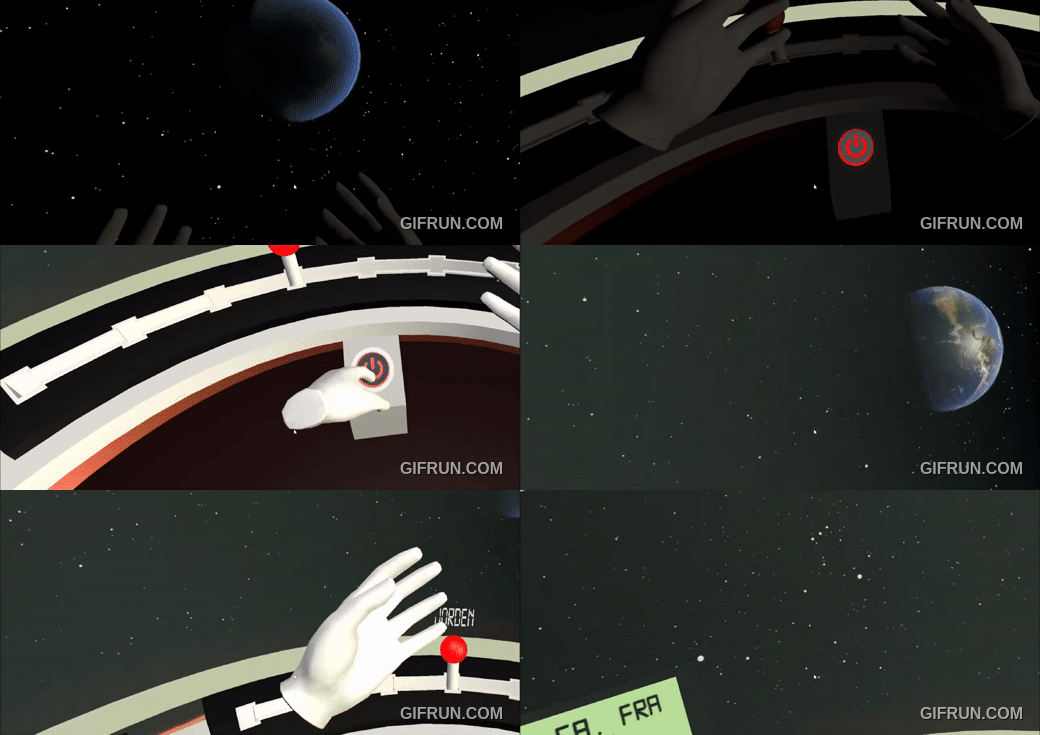
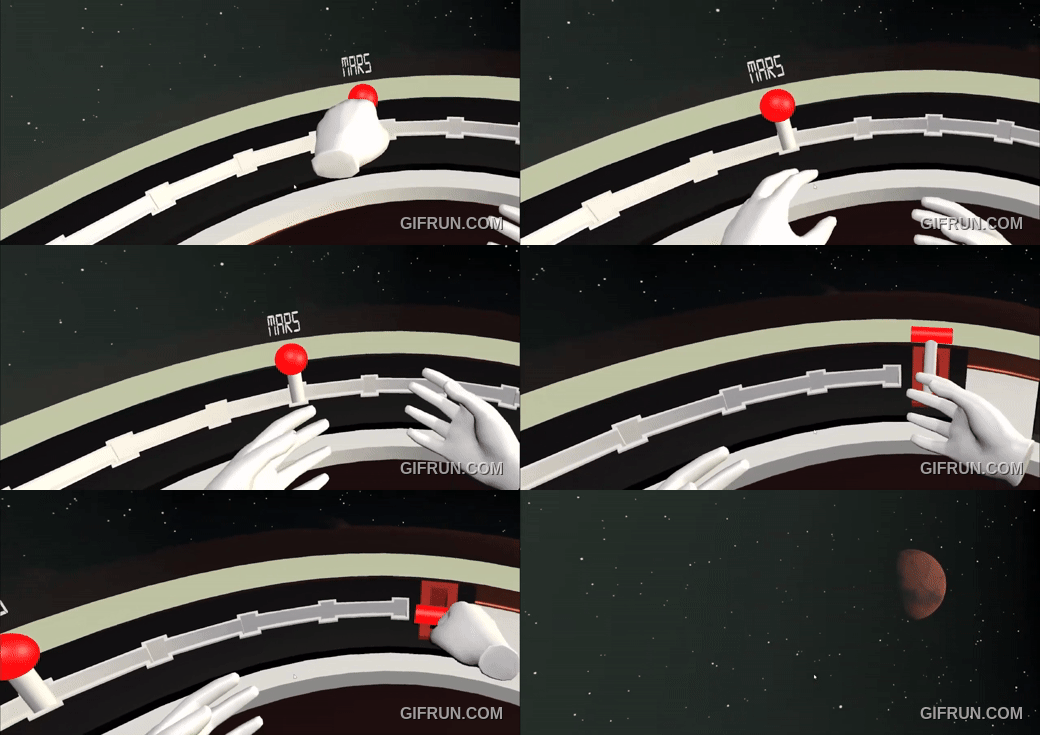
The application relies on core educational theories to replace passive intake with interactive skill acquisition. By integrating principles from 'Good Video Games as Learning Machines' and Dreyfus's 'Five Stage Model of Skill Acquisition,' the simulation translates abstract celestial mechanics into actionable tasks. Students learn through experimentation, manipulating orbital axes and viewing planetary rotations from custom vantage points.
VR Optimization
Developing for a young audience required minimizing virtual reality sickness while sustaining deep engagement. The technological platform was optimized for precise hardware performance, incorporating intuitive spatial UI and smooth controller interactions. This ensures that technical friction is eliminated, allowing students to focus entirely on the educational material.
User-Centered Design
The virtual environments and 3D planetary models were modeled in Blender to adhere strictly to classroom usability standards. Keeping assets clean and distinct prevents cognitive overload, guiding the students' focus toward specific educational touchpoints, scale ratios, and physical properties without visual distractions.
Iterative Development & Testing
The project advanced through four development iterations, heavily shaped by field research. Structured usability tests were conducted across two separate school visits with a physics class from Nymarkskolen in Svendborg. Feedback from interviews with the class teacher helped align the application with the official 'læseplan' curriculum guidelines.